
Your Shed, Your Fence, Your Pool House: What Happens When Disaster Strikes Detached Structures?
Picture your backyard. You’ve probably got a shed out there, maybe a fence lining the property, a freestanding garage, or even a fancy gazebo. Perhaps a pool house or a detached guest unit. These aren’t part of your main home, but they’re definitely part of your property, and they cost real money to build and maintain. But what exactly happens when a wildfire tears through Ventura County, or an earthquake shakes the Inland Empire, and these “other structures” take a hit?
For most California homeowners, their home insurance policy includes something called “Other Structures Coverage.” It sounds simple enough. But here’s where it gets interesting: what it covers, how much it covers, and if it’s actually *enough* for your unique situation in a state like ours, well, that’s a different story.
Myth: My home insurance covers *everything* on my property.
Truth: It covers specific things, and “Other Structures” is its own category.
Many folks assume their main dwelling coverage — Coverage A — just magically extends to every single thing on their lot. Not always. Your home insurance policy is broken down into different parts. Coverage A is for your main house. Coverage C is for your personal belongings inside. And then there’s Coverage B: Other Structures.
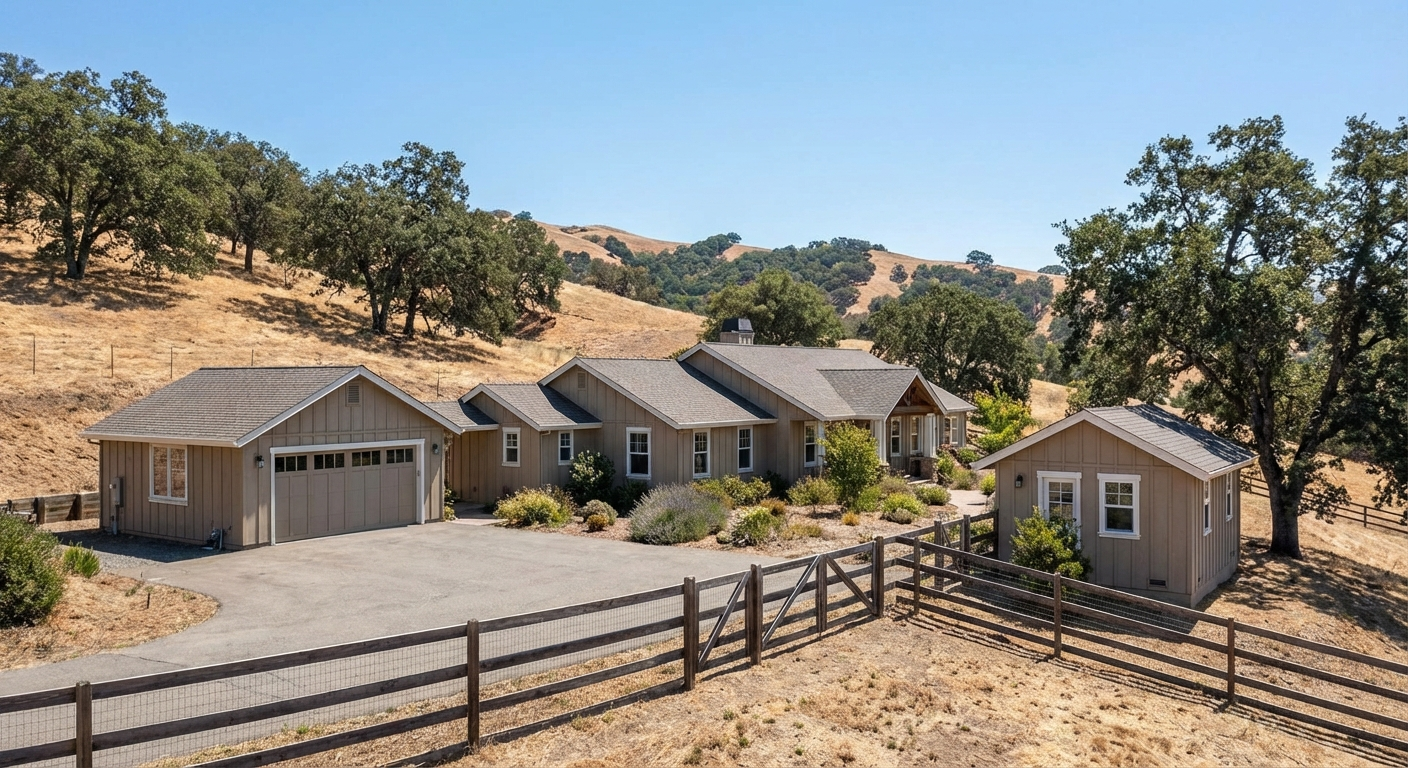
This part of your policy is specifically for structures on your property that aren’t physically attached to your main dwelling. Think about it. That shed where you keep your tools? Coverage B. The fence separating your yard from your neighbor’s? Coverage B. A detached garage, a fancy pergola over your patio, a standalone carport, even a well-built treehouse — if it’s separate from your home and not used for business (unless endorsed properly), it generally falls under this umbrella.
Why the distinction? Because the risks can be different. A fire might consume your main house, but only damage a fence. Or a strong Santa Ana wind might knock over a gazebo without touching the house at all. Insurers categorize these things for a reason.

Myth: My policy automatically gives me enough coverage for all my other structures.
Truth: Standard coverage is often a small percentage, and it might not be enough.
Here’s a common scenario: you bought a new home in, say, Santa Clarita. Your agent set up your policy, making sure your main house (Coverage A) was insured for its full rebuild cost. Great! But then you glance at Coverage B, Other Structures. What you’ll likely see is a number that’s 10% of your Coverage A amount.
So, if your main home is insured for $700,000, your Other Structures coverage might automatically be set at $70,000. Sounds like a decent chunk of change, right?
But wait — let’s do some quick math. You’ve got a sturdy, detached two-car garage. Rebuilding that alone could easily hit $50,000 to $70,000 in California, especially with today’s construction costs. Then you factor in a long stretch of fencing, a nice custom shed, and maybe a covered patio that’s not attached. Suddenly, that $70,000 starts to look pretty thin.
In areas prone to wildfire, like parts of Sonoma County or the hills surrounding Los Angeles, fences are often the first thing to go. Replacing hundreds of feet of fencing after a fire can be shockingly expensive. We’re talking tens of thousands of dollars, not just a few hundred.
Myth: It doesn’t matter if my detached structure is old or new; it’s covered the same.
Truth: The *type* of structure and its *age* can absolutely affect coverage and claims.
Insurance policies typically pay out based on either “Actual Cash Value” (ACV) or “Replacement Cost Value” (RCV).
ACV means the cost to replace the item, minus depreciation for age and wear. So, if your 20-year-old shed burns down, and it would cost $5,000 to replace new, but it’s only worth $1,000 in its used condition, that’s what you’d get under ACV.
RCV means the cost to replace it with a new one of similar kind and quality, without subtracting for depreciation. That same $5,000 shed would get you $5,000.
Many standard policies offer RCV for the main dwelling, but sometimes ACV for other structures, especially older ones or specific types like fences. This is a huge difference when it comes to getting back on your feet after a loss. Always check your policy declarations page to see if your Other Structures coverage is ACV or RCV. It’s a detail many homeowners overlook until it’s too late.
Myth: My detached guest house is covered like any other structure.
Truth: If it’s rented out, or used for business, it might need special attention.
That fancy detached guest unit you occasionally rent out on Airbnb? Or the separate office structure where you run your small business? These aren’t just “other structures” in the eyes of an insurer.
If a structure is used for business purposes, even a home-based business, it typically requires a specific endorsement on your policy. Without it, a claim for damage to that structure, or liability arising from its use, could be denied. Similarly, if you’re regularly renting out a detached unit, it can change the risk profile significantly, potentially requiring landlord coverage or specific short-term rental endorsements.
Don’t assume. A quick call to your agent can clarify if your specific use cases are covered. Karl Susman at California Homeowner Quotes, CA License #OB75129, has seen countless situations where a homeowner thought they were covered, only to find a gap because of how they were using a detached building. It’s a common oversight.
Myth: Increasing my Other Structures coverage will break the bank.
Truth: Often, it’s surprisingly affordable for the peace of mind it offers.
Given the potential costs of replacing a detached garage, a long fence, or a pool house in California, increasing your Coverage B limit is usually a smart move. And honestly, it often doesn’t add a huge amount to your annual premium.
Think about it this way: your overall premium is driven by many factors — the location (is it in a high-fire zone near Big Bear or a quieter suburban tract in the Valley?), the age of your home, its construction, your claims history. Adding an extra $50,000 or $100,000 to your Other Structures coverage might only nudge your premium up by a small percentage. It’s usually a much smaller increase than bumping up your main dwelling coverage by the same amount.
For many homeowners, especially those with significant investments in their detached property features, that small increase is well worth it. It’s a proactive step that can save you a massive headache and out-of-pocket expense if disaster strikes.
Which brings up something most people miss: The California FAIR Plan and Other Structures.
If you’re in a high-risk area for wildfire, you might find yourself with a policy from the California FAIR Plan. This is an insurer of last resort, designed to provide basic fire coverage when traditional insurers won’t.
But here’s the rub: FAIR Plan policies are *basic*. They often provide very limited coverage for other structures, or sometimes even exclude certain types of detached structures entirely. If your main dwelling is covered by FAIR Plan, you absolutely need to check what, if anything, is covered under Other Structures. You might need to purchase a separate “Difference in Conditions” (DIC) policy from a traditional insurer to get broader coverage for perils like theft, vandalism, and adequate limits for your detached buildings.
This dual-policy approach is common for many homeowners in places like Redding or areas impacted by the 2020 fires in Napa and Sonoma. It’s complicated, but it’s the reality for many Californians.
How do you figure out how much Other Structures coverage you really need?
It’s not rocket science, but it does take a little effort.
1. Make a list: Walk around your property. Jot down every detached structure. Shed, fence, garage, gazebo, pool house, separate studio, greenhouse, even that fancy mailbox structure if it’s substantial.
2. Estimate rebuild costs: This is the tricky part. Get a rough idea of what it would cost to rebuild each structure *from scratch* in today’s California market. Don’t forget materials, labor, and debris removal. For fences, measure the linear footage. For sheds and garages, think about square footage and construction quality.
3. Add it up: Sum all those estimated rebuild costs. That total is your target for Coverage B.
4. Compare to your policy: Look at your current policy declarations page. How does your current Coverage B limit compare to your target?
If your current limit is significantly lower, it’s time to talk to an expert. Karl Susman and his team at California Homeowner Quotes, CA License #OB75129, specialize in helping California homeowners figure out these exact numbers. They can help you understand your options and adjust your policy to fit your actual needs. It’s not just about getting *a* policy; it’s about getting the *right* policy.
You can start that conversation right now. Click here to get a quote and discuss your specific other structures coverage needs.
Knowing you’re properly protected isn’t just about avoiding financial loss; it’s about peace of mind. Especially in California, where natural disasters can strike with little warning, ensuring every part of your property is adequately covered is simply smart planning. Don’t leave your detached garage or your prized garden shed to chance.
Ready to make sure your entire property is covered, not just your main house? Get a quote today and connect with a knowledgeable agent who understands California’s unique insurance landscape.
Frequently Asked Questions About Other Structures Coverage
Q: Does my detached driveway or retaining wall count as an “other structure”?
A: Often, yes. If a driveway or retaining wall is completely detached from your main home and not directly supporting it, it can fall under Other Structures coverage. However, it depends on the specific policy language and how it’s constructed. Always check with your agent.
Q: What if I have a structure that’s only partially attached to my main house, like a covered walkway?
A: This gets a little fuzzy. Generally, if it shares a roofline, a common wall, or is structurally integral to the main house, it’s considered part of the main dwelling (Coverage A). If it’s merely touching or connected by something minor, it might be Coverage B. It’s best to clarify with your insurer or agent.
Q: Are trees and landscaping covered under Other Structures?
A: Generally, no. Trees, shrubs, and other landscaping are typically covered under a separate, much smaller limit within your policy, usually for specific perils like fire, lightning, or vandalism, but not wind or disease. Other Structures coverage is for *built* structures.
Q: My neighbor’s tree fell on my fence. Whose insurance pays?
A: This usually depends on whose fault it was. If the tree was healthy and fell due to an “act of God” (like a storm), your policy would likely pay for your fence. If the tree was clearly diseased or neglected, and your neighbor knew about it but did nothing, their liability coverage *might* kick in. It often starts with your own policy, though.
Q: Can I get different deductibles for Other Structures coverage?
A: Typically, your deductible applies across your property coverages (Coverage A, B, and C). So, if you have a $2,500 deductible, that usually applies to a claim on your detached garage just as it would for a claim on your main house. Some earthquake policies, however, might have a separate deductible for detached structures.
This article is for informational purposes only and does not constitute financial advice.