
The Millers’ Dilemma: Understanding Your Home’s True Value
The Millers loved their new place in Ventura County. A charming Spanish-style house built in the 1970s, nestled just far enough from the coast to avoid the highest flood premiums, but close enough for weekend beach trips. When they bought it, their focus was on the mortgage, the escrow, the endless stack of paperwork. Insurance? That felt like just another box to check, a line item on a budget. They chose a policy, signed, and mostly forgot about it.
Then came the spring rains. Not a huge storm, but enough to show the age of their roof. A slow drip started in the guest bedroom. Nothing catastrophic, but enough to panic them. They called their agent, feeling pretty good about their foresight in having insurance. That’s when the real questions started. “Is this covered?” they asked. “And if it is, how much will we actually get?”
Honestly, for most California homeowners, that “how much” question is where things get fuzzy. You think you’re covered. You pay your premiums, sometimes through the nose, especially these days. But what happens if something truly terrible hits? A wildfire like those that swept through the Santa Monica Mountains, or an earthquake shaking the Inland Empire? Will your policy pay to rebuild your life, or just a fraction of it? This is where the difference between *replacement cost* and *actual cash value* becomes a canyon, not just a crack.
Replacement Cost: Rebuilding Your Life, Not Just Your House
Let’s talk about replacement cost first. This is what you really want for your home’s structure. Plain and simple, replacement cost coverage means your insurer pays to rebuild your home exactly as it was before the disaster, using new materials of similar kind and quality, without subtracting for depreciation. You get a new roof, new walls, new flooring — whatever it takes to get you back to where you started.
Think about the Millers’ roof. If they had replacement cost coverage for their dwelling, the insurance company would pay to put a brand new roof on their home. No matter that the old one was 30 years old. They’d get a new one, up to their policy limits. It’s the gold standard. It’s the promise of being made whole again.
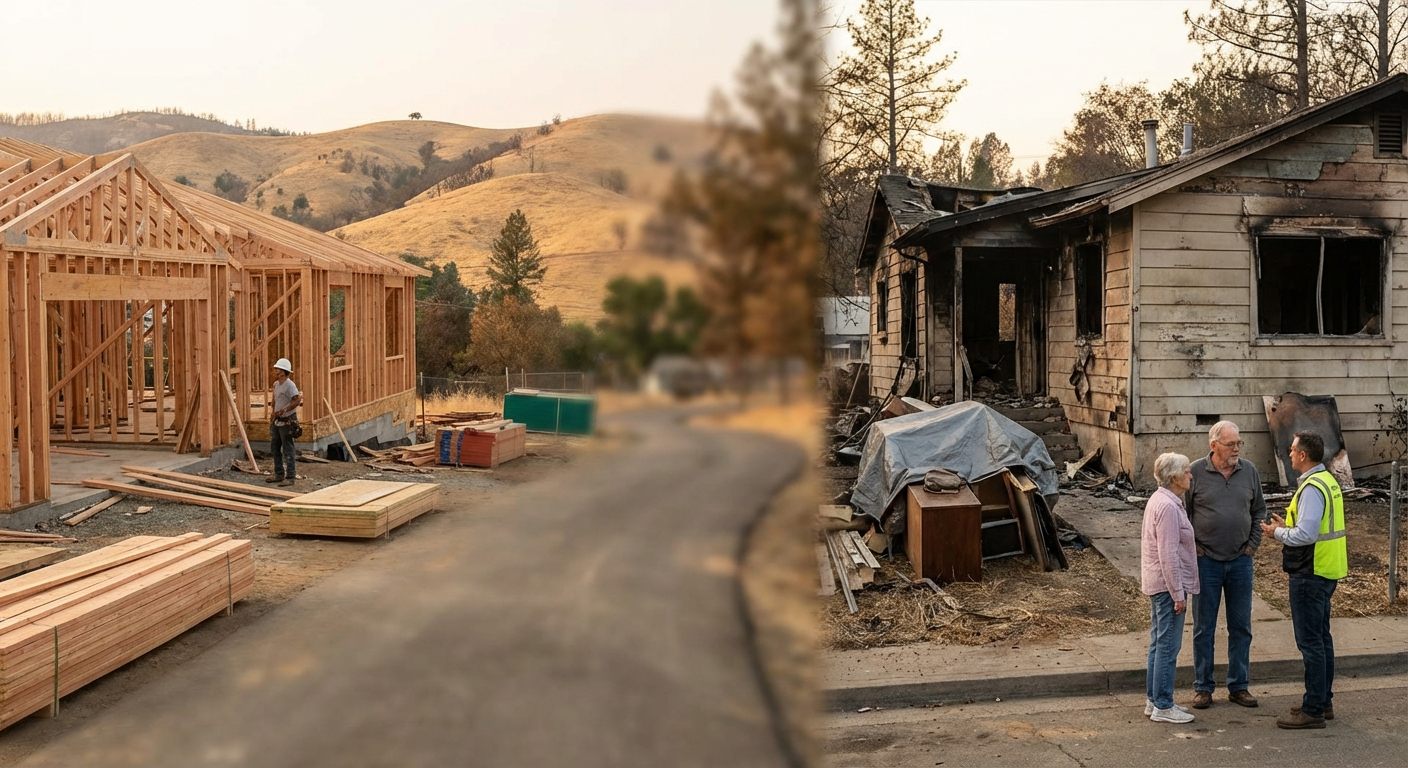
And in California, that’s a big deal. Building costs here are notoriously high. We’re talking about expensive labor, pricier materials, and strict building codes. If your home in, say, Paradise or Santa Rosa was destroyed in one of the devastating fires, rebuilding it often costs far more than the original purchase price. Why? Inflation. Supply chain issues. The sheer demand for contractors after a widespread disaster. Premiums jumped 40% between 2022 and 2024 for many homeowners, reflecting some of these realities. Replacement cost helps bridge that gap, ensuring you don’t have to pull money out of your own pocket just to get a roof over your head again.

Why Replacement Cost Isn’t Always a Straight Number
Here’s where it gets interesting. Calculating replacement cost isn’t just about looking at Zillow. Insurers use specialized software that considers local building costs, the specific materials of your home — maybe you’ve got that fancy tile roof instead of asphalt shingles, or custom cabinetry. They factor in the square footage, the number of bathrooms, even the finish quality. All these things add up.
Many policies also include something called “extended replacement cost” or “guaranteed replacement cost.” This provides an additional percentage — often 20% or 25% — above your dwelling coverage limit. It’s a lifesaver if, for example, a major fire wipes out a whole neighborhood. Suddenly, everyone needs to rebuild, driving up labor and material costs. That extra cushion can literally save your rebuild. It’s often worth every penny, especially in areas like the hills of Los Angeles or parts of Sonoma County, where rebuilding after a fire can be a nightmare of escalating expenses.
Actual Cash Value: The Depreciation Trap
Now, let’s look at the other side: actual cash value. ACV is a tougher pill to swallow for most homeowners. This kind of coverage pays for the cost of replacing your damaged property *minus depreciation*.
Imagine the Millers’ 30-year-old roof again. If their policy only paid actual cash value, the insurer would calculate how much that old roof was worth *right before* it started leaking. They’d consider its age, its expected lifespan, and its current condition. Then they’d cut a check for that depreciated value. Suddenly, the Millers might find themselves with only a fraction of what a new roof actually costs. That means they’d have to pay the difference out of their own savings. A big difference.
It’s a common scenario, and it leaves many people feeling short-changed. This kind of coverage essentially says, “We’ll pay you what your old stuff was worth, not what new stuff costs.” For a home, that’s a scary thought. Who wants to rebuild their entire life only to find they’re thousands, or even hundreds of thousands, of dollars short?
Where ACV Pops Up in California Policies
While most dwelling coverage aims for replacement cost, you’ll often see actual cash value applied to certain things. Personal belongings, for instance. Your old sofa, your five-year-old laptop, or that ancient TV in the spare room? They might be covered for their ACV. This can be a rude awakening when you try to replace them after a fire or theft.
Roofs are another big one. Many older policies, or policies on very old homes, might have ACV for the roof. This is especially true if you live in a place like the drier parts of the Inland Empire, where roofs take a beating from the sun, or if your roof is simply past its prime. An insurer might say, “Your roof had 10 years left on a 30-year lifespan, so we’re only paying for 1/3 of a new one.” You’re left with the bill for the other 2/3.
The California Reality: What Happens When Insurers Pull Back?
California’s home insurance market is, well, complicated. It’s not a secret that some big players like State Farm and Farmers have pulled back from writing new policies in certain areas. Why? Wildfire risk, rising reinsurance costs, and Proposition 103’s impact on how rates are regulated. This means fewer choices for homeowners and, often, higher premiums for those who can get coverage.
Sometimes, homeowners find themselves on the FAIR Plan, California’s “insurer of last resort.” It’s better than nothing, absolutely. But it’s usually a more basic policy, and you might find more ACV provisions there, especially for personal property or older features of your home. Which brings up something most people miss. When options are limited, it’s even more important to understand every line of your policy. Don’t just get *any* insurance; get the *right* insurance.
Making the Right Choice for Your California Home
So, what’s a California homeowner to do? The short answer is, for your dwelling, always, always, always aim for replacement cost coverage. It’s the best protection against the unexpected. It ensures that if your home is seriously damaged or destroyed, you have the financial means to rebuild it as it was.
It’s also smart to review your policy annually. Your home’s value changes. Building costs change. Your personal property changes. A quick chat with your agent can help you adjust your coverage to keep pace. Maybe you added a new deck, or remodeled a bathroom. Those upgrades increase your home’s replacement cost.
That’s when an independent agent, someone like Karl Susman at California Homeowner Quotes, really makes a difference. They don’t work for just one company. They can shop around, compare policies from different insurers, and explain the fine print — the difference between RC and ACV — in plain English. Karl Susman, CA License #OB75129, has seen it all, from the fires in Malibu to the floods in the Valley. He knows the ins and outs of the California market. You can reach his agency at (877) 411-5200.
Ready to compare your options and ensure your home is truly protected? Get a personalized quote today at californiahomeownerquotes.com/quote/.
Don’t Forget Your Personal Property
While we’ve focused heavily on the dwelling itself, remember that your personal belongings matter too. Most policies offer you a choice for contents: replacement cost or actual cash value. For a little extra premium, you can often get replacement cost for your personal property. This means if your five-year-old sofa burns in a fire, you get enough to buy a *new* sofa, not just what your old one was worth. It’s a good idea for electronics, furniture, clothing — basically anything you’d want to replace with a new item if it were lost.
Questions You Should Be Asking Your Agent
Navigating home insurance can feel like speaking a different language. Don’t be afraid to ask questions. Here are some good ones to start with:
- Is my dwelling covered at replacement cost or actual cash value?
- Do I have extended replacement cost coverage for my dwelling, and if so, what percentage?
- How are code upgrades handled if I have to rebuild? (This is crucial in California!)
- What kind of coverage do I have for my personal property – replacement cost or actual cash value?
- How often should I review my policy limits to ensure they’re adequate?
Answering these questions clearly helps you understand exactly what you’re paying for. It’s your home, after all.
Don’t leave your biggest asset to chance. Understand your options and get the right coverage for your California home. Start your free quote at californiahomeownerquotes.com/quote/.
Frequently Asked Questions About Home Insurance in California
Does my deductible affect replacement cost?
Your deductible is the amount you pay out-of-pocket before your insurance kicks in. It applies regardless of whether you have replacement cost or actual cash value coverage. So, if you have a $2,500 deductible and a $30,000 replacement cost claim, the insurer would pay you $27,500 after you’ve paid your deductible.
Can I get replacement cost for an older home?
Yes, absolutely. The age of your home doesn’t prevent you from getting replacement cost coverage for the structure. The insurer calculates the cost to rebuild it, even if it’s a historic property in Sacramento. However, some very old or unique features might be harder to replace “like for like,” and your agent can discuss those specifics.
What if I don’t rebuild after a total loss?
This is where it gets tricky. If your policy is replacement cost, but you choose not to rebuild on the same site, or not to rebuild at all, some insurers might only pay out the actual cash value of your home. Others might have options to pay out the replacement cost even if you rebuild elsewhere, but it’s important to clarify this with your agent upfront. It’s a common question after major disasters like the Camp Fire.
Is replacement cost more expensive than actual cash value coverage?
Generally, yes. Because replacement cost offers superior protection and a higher potential payout, the premiums are typically higher than for an actual cash value policy. It reflects the greater financial risk the insurance company is taking on your behalf. But wait — the peace of mind and the potential savings in a disaster often make the extra cost well worth it.
What about building code upgrades in California?
This is a big one. California has strict and constantly evolving building codes, especially after disasters. If your home is destroyed and you rebuild, you’ll likely have to meet current codes, which can add significant costs. Many replacement cost policies include an “ordinance or law” coverage, which pays for these necessary upgrades. Make sure your policy has this, and that the limit is sufficient for your area.
The Millers eventually got their roof fixed, with replacement cost coverage making all the difference. They learned a hard lesson that checking a box wasn’t enough. It’s about understanding the words on the page, the difference between “what it was worth” and “what it costs to get back.” For your home, your biggest asset, that understanding isn’t just a detail. It’s everything.
This article is for informational purposes only and does not constitute financial advice.
Karl Susman, California Homeowner Quotes, CA License #OB75129, phone (877) 411-5200