
- Understand the current challenges in California’s home insurance market for 2026.
- Learn how to assess your home’s unique risk factors.
- Discover which insurers are still actively writing policies in the state.
- Identify key policy components and essential endorsements.
- Get practical tips to potentially reduce your premiums.
- Find out the best way to shop for quotes and compare options.
Understanding California’s Shifting Insurance Landscape (2026)
For many California homeowners, the idea of “finding” home insurance has changed dramatically. It’s not just about getting the best deal anymore. Sometimes, it’s about finding *any* deal. The market for 2026 looks to be just as challenging, if not more so, than previous years.
Why 2026 is Different
Honestly, it feels like the ground beneath the insurance market has been shaking more than the actual ground in California. We’ve seen major players — like State Farm, Allstate, and Farmers — either stop writing new policies or severely restrict what they’ll cover. That’s a big deal. These weren’t small, niche companies; they were the backbone for millions of homeowners. The short answer is they’re still here, yes. The real answer is they’re much pickier, often only renewing existing customers, and sometimes not even that.
Why the exodus? Wildfires, mostly. The sheer scale and frequency of recent fire seasons have led to astronomical losses for insurers. Think about the 2025 LA fires — a hypothetical scenario, sure, but one that feels all too real when you consider the past few years. Areas like Ventura County, the Inland Empire, and even parts of the Valley are increasingly deemed high-risk. Insurers simply can’t afford the payouts, or they can’t get the reinsurance (insurance for insurers) they need to cover those risks.
Then there’s Proposition 103. This 1988 law requires state approval for rate increases. While it protects consumers from arbitrary hikes, it also means insurers can’t always raise rates fast enough to keep up with their rising costs. That creates a squeeze, and some companies decide it’s just not worth staying in the California market. Which brings up something most people miss: The California FAIR Plan. It’s supposed to be a last resort, a safety net. But it’s quickly becoming the *only* option for a growing number of homeowners, especially those in brush zones. It’s better than nothing, absolutely, but it often offers less coverage at a higher price than a traditional policy.

The Cost Conundrum
It’s not just about availability; it’s about price. Premiums jumped, on average, something like 40% between 2022 and 2024 for many homeowners. That’s a staggering increase. Inflation plays a part, of course, driving up the cost of materials and labor for repairs. But the biggest factor remains those ever-increasing reinsurance costs. When the companies that insure the insurers charge more, those costs get passed down to us. It’s a tough pill to swallow, especially when you feel like you’re doing everything right to protect your home.
Step 1: Know Your Home’s Risk Profile
Before you even think about getting a quote, you need to understand your own home’s position in this wild insurance market. Insurers are looking for reasons to say “no” or to charge a lot. You want to know those reasons yourself so you can address them or at least understand the implications.
Location, Location, Location
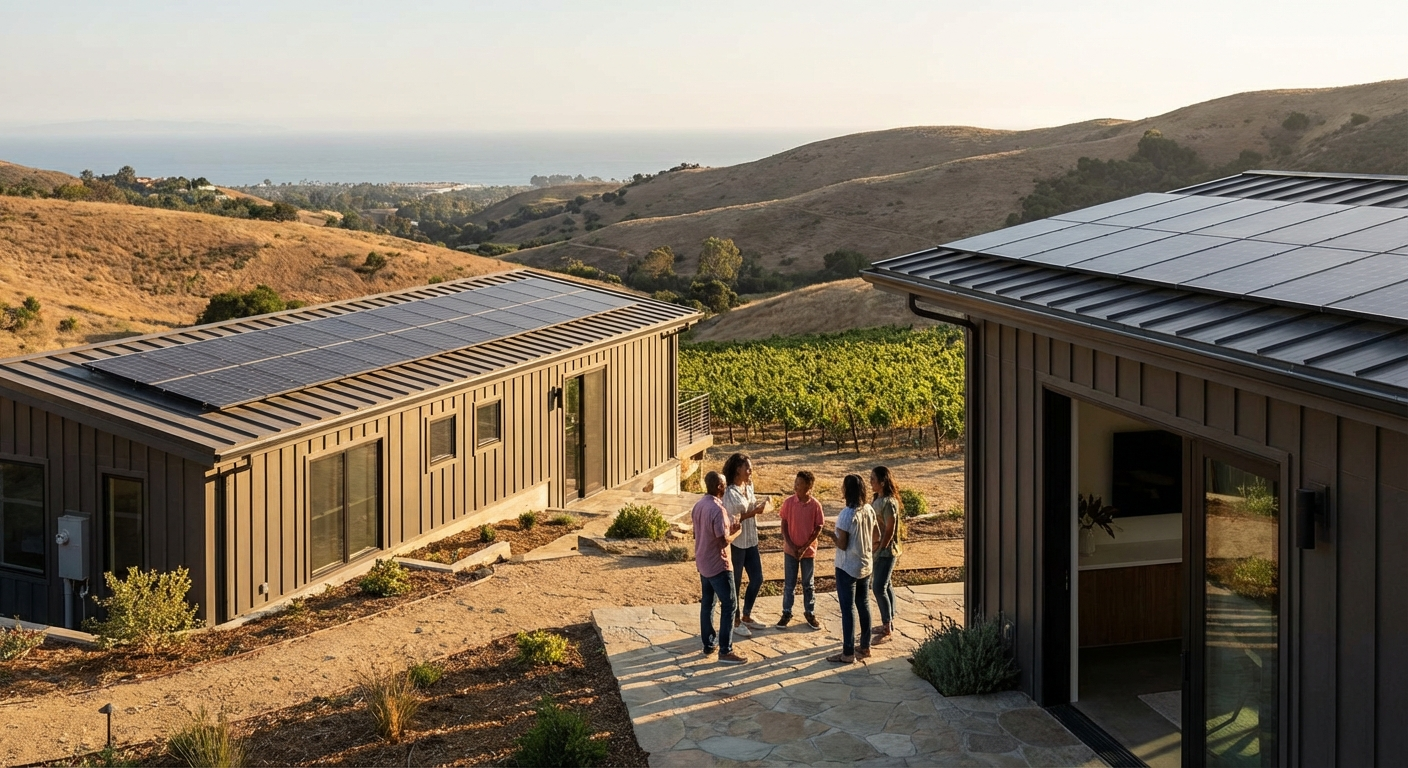
This one’s obvious, but it’s the first thing any insurer checks. Is your home in a designated brush zone? How far is it from the nearest fire station? What about a fire hydrant? These details matter. Even if you’re not in the mountains, proximity to open spaces or canyons can push you into a higher-risk category.
But wait — fire isn’t the only risk. Are you in a flood zone? Coastal areas, properties near rivers or major storm drains, even some flat inland areas can be susceptible to flooding. And don’t forget earthquakes. California sits on numerous fault lines. While standard home insurance doesn’t cover quake damage, your proximity to a fault can influence an insurer’s overall assessment of your property.
Home Characteristics Matter
Beyond where you live, what about the house itself? The age of your roof, your electrical system, and your plumbing are big factors. Older components mean higher risk for leaks or electrical fires. Has your roof been replaced recently with a fire-resistant material? That’s a huge plus. What about your home’s overall construction? Wood shake roofs? Those are definitely an issue.
Then there’s defensible space. If you’re in a wildfire-prone area, clearing brush, trimming trees, and maintaining a non-combustible zone around your home isn’t just a good idea; it’s often a requirement for coverage. Insurers will ask about it. They might even send someone out to check. Ignoring this part could mean no coverage at all.
Step 2: The Search — Who’s Still Playing in California?
Okay, you know your risks. Now, who’s actually willing to write you a policy in 2026? This is where it gets interesting, and often frustrating.
The Big Names (and Their Current Stance)
Companies like State Farm, AAA, and Farmers are still operating in California. But here’s the thing: they’re not necessarily *easy* to get coverage from, especially if you’re a new customer in a high-risk area. They’ve tightened their belts, focusing on customer retention or only taking on new business in very low-risk zones. You might find that Mercury, Travelers, or USAA (if you’re a military family) are more open to new policies, but even they’ve adjusted their underwriting criteria significantly. It’s definitely not a guarantee.
Newer Entrants and Specialty Insurers
This is where the market gets a bit more creative. You might find smaller, regional carriers who are still willing to write policies, often with more specific requirements or higher premiums. There are also specialty insurers who focus on high-value homes or properties with unique risk profiles. They might be pricier, but they offer options when others won’t.
But here’s the real secret weapon: independent agents. These aren’t captive agents who only sell for one company. An independent agent works with multiple carriers. They know who’s writing what, where, and under what conditions. They can often find options you’d never discover on your own. Karl Susman at California Homeowner Quotes, CA License #0B75129, has been helping California homeowners navigate this tough market for years. He and his team know the ins and outs of who’s offering what.
Step 3: Decoding Your Policy — What to Look For
Finding a policy is one thing; understanding what it actually covers is another. Don’t just look at the premium. Dig into the details.
Dwelling Coverage (Coverage A)
This is the big one: the cost to rebuild your home. You’ll want “replacement cost” coverage, not “actual cash value.” Actual cash value pays out for the depreciated value of your home, which means you’d get less than it costs to rebuild. Replacement cost, as the name suggests, pays what it takes to rebuild your home from the ground up, up to your policy limit.
Which brings up something most people miss: “Extended Replacement Cost.” In California, this is absolutely crucial. Building costs can skyrocket after a major disaster due to demand for labor and materials. Extended replacement cost gives you an extra percentage — say, 20% or 25% — above your dwelling limit. So, if your home is insured for $500,000, extended replacement could give you up to $600,000 or $625,000. It’s a lifesaver if rebuilding costs surge.
Other Structures (Coverage B), Personal Property (Coverage C), Loss of Use (Coverage D)
* **Other Structures (Coverage B):** Think detached garages, sheds, fences. Typically 10% of your dwelling coverage, but you can increase it.
* **Personal Property (Coverage C):** All your stuff inside the house. Again, replacement cost is better here. Make sure your limits are high enough. Have a home inventory, too.
* **Loss of Use (Coverage D):** If your home is uninhabitable after a covered loss, this pays for temporary living expenses — hotel, rent, food. It’s incredibly important, especially with how long rebuilding can take.
Liability (Coverage E) and Medical Payments (Coverage F)
* **Liability (Coverage E):** Protects you if someone is injured on your property and you’re found responsible. Or if you accidentally damage someone else’s property. Don’t skimp here. A million dollars in liability isn’t uncommon, and an umbrella policy can add even more.
* **Medical Payments (Coverage F):** Pays for minor medical bills for guests injured on your property, regardless of fault. Usually a lower limit, but a nice buffer.
The Riders and Endorsements You Can’t Ignore
Standard home insurance policies in California *do not* cover earthquake or flood damage. You need separate policies for those.
* **Earthquake Coverage:** Often purchased through the California Earthquake Authority (CEA) or private insurers. It’s expensive, and deductibles are usually high (10-25% of your dwelling limit). But if you’re near a fault, can you afford not to have it?
* **Flood Insurance:** Available through the National Flood Insurance Program (NFIP) or private flood insurers. If you’re in a designated flood zone, your lender will require it. Even if you’re not, consider it. Water damage is a massive headache.
* **Wildfire Coverage Specifics:** Pay close attention to any wildfire sub-limits or special deductibles. Some policies might have a separate, higher deductible just for wildfire claims.
* **Sewer Backup/Water Backup:** This covers damage from water backing up through sewers or drains. Not always included, but a common and expensive problem.
* **Service Line Coverage:** Covers repairs to utility lines (water, sewer, gas, electrical) running from your property line to your home. Who knew you were responsible for those?
Step 4: Strategies to Lower Your Premium (Without Sacrificing Coverage)
Even in a tough market, there are ways to potentially reduce your costs. It just takes a little effort.
Home Hardening
This is one of the most effective strategies, especially in wildfire-prone areas. Insurers love homes that are less risky.
* **Fire-resistant roofing:** Metal, tile, or composition shingles are better than wood shake.
* **Dual-pane windows:** Can help resist embers.
* **Ember-resistant vents:** Prevents embers from entering your attic or crawl space.
* **Defensible space improvements:** Clear vegetation, remove flammable materials, prune trees. Some insurers offer discounts for these efforts. Check with your local fire department for guidelines.
Smart Deductibles
A higher deductible usually means a lower premium. Can you comfortably afford a $2,500 or $5,000 deductible if you had a claim? If so, raising it could save you a decent chunk of change each year. Just don’t raise it so high that a claim would be financially ruinous.
Bundling and Discounts
This is classic insurance advice, but it still works.
* **Bundle policies:** Get your auto and home insurance from the same company. Big savings often come this way.
* **Security systems:** Monitored systems can get you a discount.
* **Non-smoker discounts:** Some insurers offer them.
* **New home construction:** Newer homes often get better rates.
* **Claims-free discount:** If you haven’t filed a claim in a while, you might qualify.
Talk to an Expert
Honestly, in this market, trying to do it all yourself is a recipe for frustration. An independent agent like Karl Susman at California Homeowner Quotes, CA License #0B75129, can be your biggest asset. They know the market inside and out, they know which companies are still writing business, and they can compare options from multiple carriers to find the best fit for your specific situation. They’ll also explain the nuances of each policy. You can start the conversation and get quotes right here: Get Your California Home Insurance Quote.
Step 5: Getting Your Quotes — The Right Way
You’ve done your homework. Now it’s time to actually get some numbers.
Be Prepared
When you’re ready to get quotes, have all your home’s details handy:
* Year built, square footage, number of stories.
* Recent updates to roof, electrical, plumbing, HVAC (dates and costs).
* Construction type (stucco, brick, wood frame).
* Any safety features (alarm systems, sprinklers).
* Your claims history for the past 5-7 years.
* The exact address.
Don’t Just Compare Price
This is a common mistake. A lower premium might mean significantly less coverage or a much higher deductible. Compare apples to apples:
* **Coverage limits:** Are they similar across policies?
* **Deductibles:** Are they the same?
* **Endorsements:** Does one policy include something vital (like extended replacement cost) that another doesn’t?
* **Exclusions:** What *isn’t* covered? Read the fine print.
When to Use an Independent Agent
Especially in a market like California in 2026, an independent agent isn’t just a convenience; they’re often a necessity. They have access to a wider range of insurers than you’d find by calling companies one by one. They understand the complex underwriting rules for different areas and can often present your home in the best light to potential carriers. They’re your advocate. Don’t go it alone. Get personalized help and compare your options today. It’s a smart move for any California homeowner trying to secure their future. Find out what Karl Susman and his team at California Homeowner Quotes can do for you by getting a quote: Start Your Home Insurance Quote Now.
Frequently Asked Questions About California Home Insurance 2026
What if I can’t find traditional home insurance coverage at all?
If you’re truly unable to secure a policy from a standard insurer, the California FAIR Plan is designed as a last-resort option. It provides basic fire coverage, but you’ll likely need to purchase a “Difference in Conditions” (DIC) policy from a separate insurer to cover other perils like liability, theft, and water damage. It’s often more expensive and less comprehensive than a standard policy, but it’s better than nothing.
Is earthquake insurance automatically included in my home insurance policy?
No. Standard home insurance policies in California specifically exclude earthquake damage. You must purchase a separate earthquake insurance policy, typically from the California Earthquake Authority (CEA) or a private insurer. These policies usually come with high deductibles, often 10% to 25% of your dwelling coverage.
What exactly is “defensible space” and why is it so important?
Defensible space refers to the area around your home that has been modified to reduce fire risk. This includes clearing flammable vegetation, removing dead plants, trimming tree branches, and maintaining a non-combustible zone immediately around your structure. It’s crucial because it gives firefighters a safer area to work and helps prevent flames from reaching your home. Many insurers now require defensible space and may even inspect for it, especially in high-risk areas.
Can my home insurance policy be canceled if I file too many claims?
Yes, it can. While insurers can’t cancel your policy mid-term without a valid reason (like non-payment or fraud), they can choose not to renew your policy at the end of its term. Filing multiple claims, especially for smaller incidents, can make you appear high-risk and lead to non-renewal or significantly higher premiums with other carriers.
Will my premium go up if I make home improvements, like adding a pool?
It’s very likely. Adding a pool increases your property’s value, which means higher dwelling coverage is needed. More importantly, a pool significantly increases your liability risk. Insurers will almost certainly raise your premium to account for the added potential for injury claims. Always inform your insurer of major home improvements.
This article is for informational purposes only and does not constitute financial advice.