Living with Fire: Understanding Home Insurance in California’s High-Risk Zones
You love your California home. Maybe it’s nestled in the Santa Monica Mountains, offers sweeping views from the hills of Ventura County, or sits on a quiet street in the Inland Empire. There’s a magic to living here, an undeniable beauty. But for many, especially those of us in the wildland-urban interface, that beauty comes with a constant, nagging worry: fire. It’s a heavy thought. The anxiety over losing your home, your memories, everything you’ve worked for—that’s a burden no one should carry alone. And then there’s the added stress of simply *finding* insurance, or keeping it, when it feels like the whole system is against you. We get it. It’s confusing, it’s frustrating, and sometimes, it feels downright unfair.
The Shifting Ground Beneath Your Policy
For years, getting homeowners insurance in California felt fairly straightforward. You called an agent, got a quote, and boom—you were covered. Not anymore. Not for many of us, anyway. Insurers like State Farm and Farmers have publicly announced they’re pulling back, not writing new policies, or drastically limiting their exposure here. It’s not just a rumor; it’s a reality homeowners across the state are facing. This isn’t about you doing something wrong; it’s about a changing climate and the sheer scale of recent fire losses. Premiums jumped 40% between 2022 and 2024 for many folks, and finding *any* coverage can feel like a quest for the Holy Grail.

What Exactly Makes a “Fire Zone”?
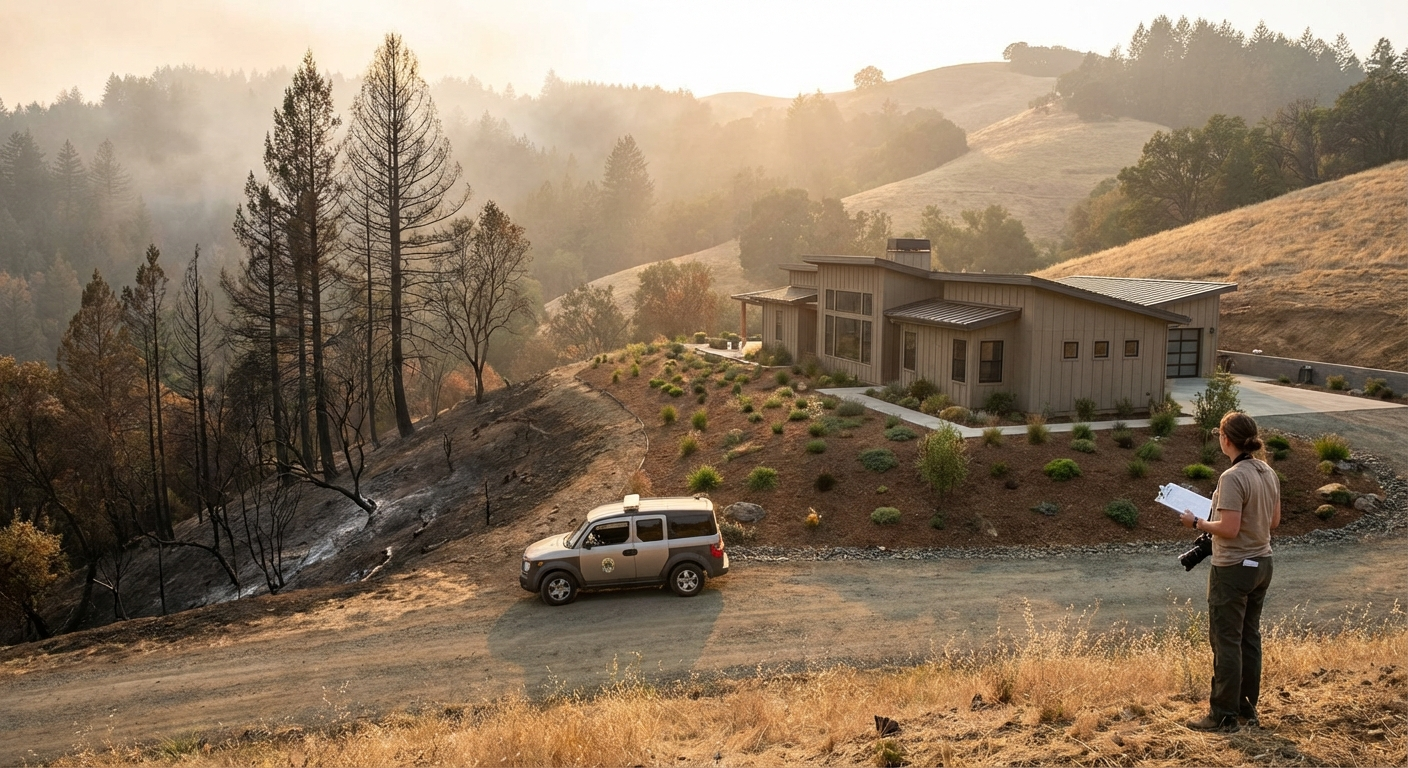
You hear the term “fire zone” all the time, but what does it really mean for your home? Essentially, it’s any area identified as having a higher risk of wildfire. CAL FIRE, our state’s firefighting agency, produces maps that classify areas based on factors like vegetation, slope, and weather patterns. These aren’t just remote mountain cabins, either. Many suburbs in places like the Valley or foothills of the Sierra Nevada are considered high-risk, especially where homes meet wildland—that’s the “wildland-urban interface” everyone talks about.
Here’s where it gets interesting. Even if you’ve lived in your home for decades and never had an issue, your property’s fire risk rating can change. New vegetation growth, a neighbor clearing (or not clearing) their land, even updated mapping technology can shift your home into a higher-risk category. Insurers use these maps, along with their own proprietary data, to decide if they’ll cover you and what they’ll charge.
The FAIR Plan: An Insurer of Last Resort
When traditional insurers won’t touch your property, California has a fallback: the FAIR Plan. It stands for Fair Access to Insurance Requirements. Think of it as a safety net. If you can’t get coverage on the open market, the FAIR Plan is legally obligated to provide it. For a lot of folks, it’s been a lifeline, especially after the devastating fires we’ve seen, like the ones that tore through Malibu or Paradise.
But wait—it’s not a perfect solution. The FAIR Plan is designed to be a basic policy, not a full-service one. It typically covers fire damage, but you’ll often need to buy a separate “Difference in Conditions” (DIC) policy from another insurer to get coverage for things like liability, theft, and water damage. The price? It’s usually higher than a traditional policy, sometimes significantly so, because it’s covering the riskiest properties. Recent changes have tried to make it more robust, but it still often feels like a patchwork solution. It can feel like a punishment for simply owning a home in a beautiful, but vulnerable, part of California.
Understanding Your Options — And Why It Feels Impossible
You’ve probably tried calling a few big-name insurers, only to be told they can’t help. Or maybe your renewal premium came back so high your jaw dropped. You’re not alone. Many homeowners are hitting brick walls. The standard market, where you get a single policy covering everything, has shrunk dramatically in high-fire areas.
So, what are your options when the well feels dry?
1. **The Admitted Market (if you can find it):** These are insurers regulated by the state, like State Farm or AAA. They follow state rules, and their rates are approved by the California Department of Insurance. If you can find one willing to cover you, it’s usually the best option.
2. **The Non-Admitted Market (Excess & Surplus Lines):** These insurers aren’t regulated by the state in the same way, giving them more flexibility with rates and policy terms. They often step in for properties considered too risky by the admitted market. Policies here can be pricier and have different exclusions, but they offer coverage when no one else will.
3. **The FAIR Plan with a DIC Policy:** As we discussed, this is the combination many people are forced to use. It’s a two-part solution that requires managing two separate policies.
Which brings up something most people miss. Finding these options, understanding the fine print, and making sure you’re truly protected? That’s where an independent insurance agent comes in. Someone who works for *you*, not a single insurance company.
Making Your Home More Insurable (and Safer)
Here’s where you can take back some control, even when the insurance market feels wild. Insurers are increasingly looking at what you’re doing to protect your home. Investing in fire-wise measures can not only make your property safer from the next big fire event—like the hypothetical 2025 LA fires we all dread—but it can also make you a more attractive customer to an insurer.
* **Defensible Space:** This is huge. Clearing brush, dead leaves, and anything flammable at least 100 feet around your home. Trim low-hanging tree branches. Remove anything combustible from under decks. It creates a buffer that can starve a fire.
* **Home Hardening:** Think about making your home itself more resistant.
* **Roofing:** Non-combustible materials like tile or metal are best.
* **Vents:** Install fine mesh screens (1/8 inch or smaller) to keep embers out of attics and crawl spaces.
* **Windows:** Dual-pane windows with tempered glass can offer better protection.
* **Siding:** Fire-resistant materials like stucco or fiber cement are better than wood.
* **Gutters:** Keep them clear of debris. Consider metal gutters.
* **Decks:** Enclose the undersides to prevent embers from blowing underneath. Use fire-resistant materials if building new.
Some insurers even offer discounts for these improvements. It’s not just about saving a few bucks; it’s about peace of mind and significantly increasing your home’s chances of survival.
The Cost of Protection — What Drives Premiums Up
Three things drive your premium up: location, rebuilding costs, and risk. In California fire zones, risk is the big one. Insurers look at:
* **Your property’s specific fire risk score:** This is based on vegetation, slope, access for firefighters, and weather patterns.
* **The cost to rebuild your home:** With inflation and supply chain issues, construction costs have soared. Your policy needs to cover the full cost of rebuilding, not just the market value.
* **Claims history:** Not just yours, but the overall claims history of your region. When an area has seen massive fire losses, everyone in that area feels the pinch.
* **Your home’s construction materials:** As mentioned earlier, a wood-sided home in a high-risk area will cost more to insure than one with stucco.
It’s a complex equation, and it’s why two identical homes just a few miles apart can have wildly different insurance rates.
A Word on Renewals and Non-Renewals
Imagine getting a non-renewal notice in the mail. Your heart sinks. It feels personal, like you did something wrong. You didn’t. It’s often a business decision by the insurer to reduce their overall risk in a specific geographic area.
If you get a non-renewal, don’t panic. You have options. You usually have a window of time—often 60 to 75 days—to find new coverage. This is exactly the kind of situation where an experienced independent agent can make all the difference. They know the market, they know which companies are still writing in your area, and they can help you piece together a solution.
Finding Your Way Forward with an Independent Agent
Trying to sort through all this on your own is like trying to put out a wildfire with a garden hose. It’s overwhelming. This is where someone like Karl Susman comes in. As an independent agent with California Homeowner Quotes, CA License #OB75129, Karl and his team don’t work for one company. They work for *you*.
They understand the California market intimately, especially the complexities of fire zones. They can explain the difference between admitted and non-admitted policies, help you understand the FAIR Plan, and most importantly, shop around to find the best possible coverage for your unique situation. They’re counselors, not just salespeople. They’ve seen it all, and they’ve helped countless homeowners just like you find solutions when they thought there were none.
You don’t have to face this alone. Call Karl Susman at (877) 411-5200, or click here to start a conversation about your options: https://susmaninsurance.com/get-a-quote/
The Future of Fire Insurance in California
It’s easy to feel pessimistic about the future of home insurance in California fire zones. The market is tough, and the risks feel higher than ever. But there are efforts underway to make things better. State regulators, guided by Prop 103, are working with insurers to encourage them to write more policies in California. Commissioner Ricardo Lara, for example, has been pushing for changes that tie rate increases to commitments from insurers to offer more coverage and consider homeowners’ mitigation efforts.
Change is slow, though. It’s a huge ship to turn around. For now, staying informed, taking proactive steps to protect your home, and working with an expert who knows the twists and turns of the California insurance market are your best defenses. Protecting your home and your peace of mind is still possible.
Frequently Asked Questions About California Fire Zone Home Insurance
What if my current insurer drops me because I live in a fire zone?
First, don’t panic. This is happening to many homeowners. You’ll typically receive a non-renewal notice, giving you a window of time—usually 60 to 75 days—to find new coverage. Your next steps should be to contact an independent insurance agent, like Karl Susman at California Homeowner Quotes. They can help you explore options in the admitted market, non-admitted market, or the California FAIR Plan.
Is the California FAIR Plan my only option if I’m in a high-risk fire zone?
Not always. While the FAIR Plan is often the insurer of last resort, an independent agent might still find an admitted or non-admitted policy for you, especially if you’ve done significant home hardening or defensible space work. The FAIR Plan typically requires a separate “Difference in Conditions” (DIC) policy to cover perils beyond fire, like liability and theft.
What does “defensible space” mean, and how does it affect my insurance?
Defensible space refers to the area around your home that has been cleared of flammable vegetation and materials to reduce the risk of wildfire. This usually means a 100-foot buffer. Insurers are increasingly looking at your defensible space and home hardening efforts when assessing risk and setting premiums. Taking these steps can make your home safer and potentially more insurable.
Can I get a discount on my home insurance for making fire-resistant improvements?
Yes, sometimes. Some insurers offer discounts or more favorable terms for homeowners who have invested in fire-resistant roofing, non-combustible siding, ember-resistant vents, or maintained excellent defensible space. It’s always worth discussing these improvements with your agent to see if they qualify for any savings or make you eligible for a broader range of policies.
Why are my premiums so high even if I’ve never filed a claim?
Your premium isn’t just based on your individual claims history. It’s heavily influenced by the overall risk of your specific geographic area, the cost to rebuild homes in California, and the cumulative losses insurers have faced from wildfires across the state. Even if your home has never burned, if you’re in a high-risk fire zone that has seen significant losses, your rates will reflect that broader risk pool.
Ready to explore your options and find the right coverage for your California home? Don’t wait until it’s too late. Contact Karl Susman at California Homeowner Quotes, CA License #OB75129, directly at (877) 411-5200, or click here to get started: https://susmaninsurance.com/get-a-quote/
This article is for informational purposes only and does not constitute financial advice.