
When Your California Home’s Foundation Starts to Fret
For many California homeowners, the very ground beneath their feet can feel a bit… shifty. Maybe you’ve spotted a hairline crack creeping up a wall, or a door that suddenly doesn’t quite shut right. Perhaps you’ve even noticed a slight dip in your living room floor. Instantly, your mind probably jumps to one of the scariest phrases in homeownership: foundation damage. It’s a gut punch, really. And then, almost immediately, the next thought hits: “Is this covered by my home insurance?”
That’s a question Karl Susman from California Homeowner Quotes hears a lot. And honestly, it’s one of the most complicated. The short answer is yes, sometimes. The real answer is a lot more complicated, especially here in California, where the ground itself seems to have a mind of its own.
Why California Foundations Are Always on Edge
Think about where we live. California is a geological marvel — and a bit of a headache for home foundations. We’ve got it all: earthquakes, massive droughts followed by heavy rains, and some truly stubborn soil types.
* **Earthquakes:** This one’s obvious, isn’t it? Our state sits on a patchwork of fault lines. A major shaker, even one miles away, can put immense stress on a foundation. But here’s where it gets interesting. Standard home insurance policies almost never cover earthquake damage. For that, you need a separate earthquake policy, often through the California Earthquake Authority (CEA) or a private insurer. It’s an extra cost, sure, but if you live in, say, Ventura County or the Inland Empire, it’s a conversation you really should be having.
* **Expansive Soils:** This is a big one, and often overlooked. Much of California, particularly areas like the Central Valley and parts of the Inland Empire, has clay-rich soils. When these soils get wet — say, after a heavy winter rain — they swell. A lot. Then, when a long, dry summer hits, they shrink. This constant swelling and shrinking puts incredible pressure on a home’s foundation, pushing and pulling until something gives. Imagine your house sitting on a giant, slow-motion sponge. That’s what it feels like.
* **Drought and Rain Cycles:** We just touched on it, but it’s worth expanding. California swings wildly between years of severe drought and periods of intense rainfall. Those long dry spells can cause the soil to compact and pull away from your foundation, creating voids. Then, when the rains come, water rushes into those voids, saturating the soil and causing it to expand unevenly. This kind of consistent, cyclical stress is a nightmare for foundations.
* **Poor Drainage:** Sometimes, the problem isn’t the soil itself, but how water interacts with it around your house. If your gutters are clogged, or your landscaping slopes towards your home, rain can pool around the foundation. This constant moisture can lead to a host of issues, from erosion to hydrostatic pressure that pushes against your foundation walls. It’s often a preventable problem, but one that can cause significant damage over time.
* **Plumbing Leaks:** This is another sneaky culprit. A slow, unseen leak in an underground pipe or beneath your slab can steadily saturate the soil directly under your foundation. Over months, even years, this localized saturation can soften the soil, wash it away, or cause uneven expansion, leading to settlement or cracks.

The Big Question: Does Home Insurance Chip In?
Okay, so we know what causes foundation damage. Now, about that insurance coverage. This is where most folks get tripped up, and it’s where the nuances of your policy really matter.
Generally speaking, standard home insurance policies are designed to cover “sudden and accidental” damage caused by specific named perils. Think fire, burst pipes, windstorms, vandalism. When it comes to foundations, insurers draw a very thick line between sudden accidents and problems that develop gradually or stem from maintenance issues.
What’s Usually Covered (Sometimes)
* **Sudden Pipe Burst:** If a pipe suddenly bursts under your slab and the resulting water damage undermines your foundation, that *could* be covered. The key word is “sudden.” It’s not about the leak itself, but the damage the water causes. The cost of repairing the pipe? Probably not. The cost to fix the foundation damage caused by the water? Possibly. This is where it gets very specific to your policy language.
* **Vehicle Impact:** A car crashing into your house and damaging the foundation? Yes, that’s almost certainly covered. It’s a sudden, accidental event.
* **Fire:** If a fire damages your home’s structure, including the foundation, that’s typically covered.
What’s Almost Always Excluded
Here’s the tough part. Most foundation damage falls into categories that standard policies specifically exclude.
* **Earth Movement (Unless it’s an Earthquake Policy):** This is the big one. Most policies have an “earth movement” exclusion. This means damage from landslides, mudslides, sinkholes, and yes, even the gradual settling or shifting caused by expansive soils, is typically not covered. Insurers see these as natural geological processes or long-term issues, not sudden accidents.
* **Settling, Shrinking, Bulging, or Expansion:** This language is common in policies. It’s designed to exclude damage caused by the very issues we discussed earlier — the natural movement of soil due to moisture changes. They consider this a maintenance issue or a risk inherent to the property’s geology.
* **Wear and Tear / Gradual Deterioration:** If your foundation simply degrades over decades, or if minor cracks grow into major problems due to lack of maintenance, that’s not covered. Insurers expect homeowners to maintain their property.
* **Poor Construction or Defective Materials:** If your foundation was poorly built or used substandard materials, that’s not an insurance issue; it’s a construction defect issue. You’d typically need to pursue the builder or contractor.
* **Flooding:** This is another separate policy. If floodwaters undermine your foundation, your standard homeowner’s policy won’t cover it. You need flood insurance, usually through the National Flood Insurance Program (NFIP).
Which brings up something most people miss. Often, the damage you see — the cracks, the uneven floors — isn’t considered “sudden.” It’s the culmination of months or years of stress. And that’s usually where coverage falls apart.
The California Insurance Climate Doesn’t Help
Let’s be blunt: getting home insurance in California is getting harder and more expensive. Premiums jumped 40% between 2022 and 2024 for many homeowners. Insurers like State Farm and Farmers have pulled back from writing new policies in some areas, citing wildfire risk and rising reinsurance costs. This means they’re also scrutinizing claims more closely and being very particular about what they’ll cover.
The California FAIR Plan, our state’s “insurer of last resort,” can offer basic coverage when private insurers won’t. But its coverage is often bare-bones, and foundation damage from earth movement or settling definitely isn’t on its list of covered perils.
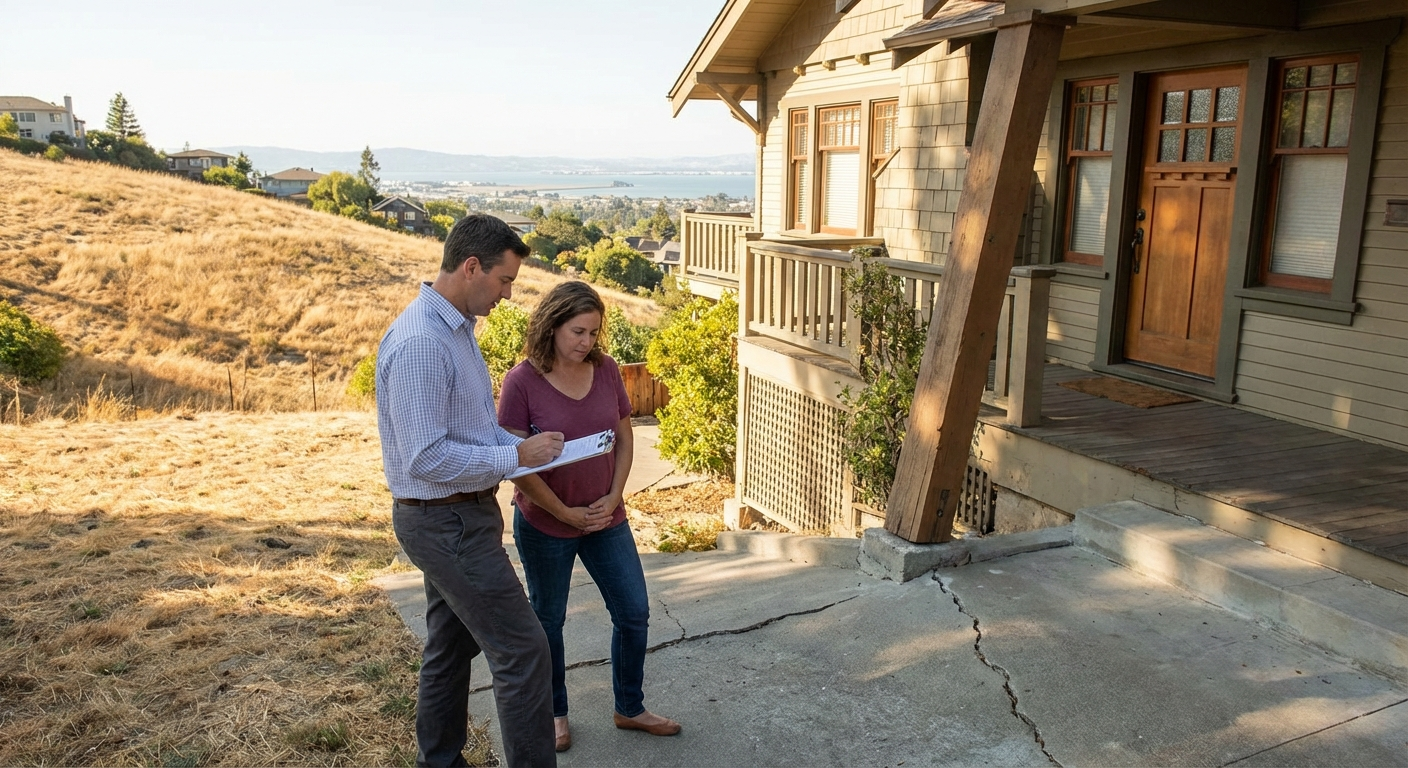
What Can a Homeowner Do?
Feeling a little overwhelmed? You’re not alone. But there are steps you can take.
1. **Read Your Policy (Really Read It):** I know, it’s dense. But find the sections on “Exclusions” and “Perils Covered.” Look for terms like “earth movement,” “settling,” “subsidence,” and “water damage.” Understanding these specific clauses is your first line of defense.
2. **Regular Maintenance is Key:**
* **Manage Water:** Ensure your gutters are clean and direct water at least 5-10 feet away from your foundation. Check that your landscaping slopes away from the house.
* **Inspect Regularly:** Walk around your house a few times a year. Look for new cracks in the foundation, walls, or slab. Check for pooling water.
* **Fix Leaks Promptly:** Don’t ignore a leaky faucet or a damp spot on your lawn that could indicate a hidden pipe leak.
3. **Consider an Earthquake Policy:** If you haven’t, talk to Karl Susman about earthquake insurance. It won’t cover all foundation issues, but it’s essential protection against one of California’s biggest threats.
4. **Talk to an Expert:** This is probably the most important step. Don’t guess. Don’t assume. Call a trusted insurance agent.
Your Best Ally: A Good Insurance Agent
Navigating the complexities of home insurance and foundation damage, especially in California, isn’t something you should do alone. This is exactly where a seasoned independent agent like Karl Susman comes in. He and his team at California Homeowner Quotes don’t just sell policies; they help you understand them. They’ll look at your specific home, its location — maybe you’re in a high-clay area of the Valley, or near a fault line in Southern California — and help you understand your risks and your options.
They can explain what those tricky policy exclusions really mean and whether there are any endorsements or specialized policies that could offer more protection for your unique situation. It’s about getting straight answers and peace of mind.
If you’re worried about your home’s foundation or simply want to ensure you have the right coverage for your California property, don’t wait until a small crack becomes a big problem.
Reach out to Karl Susman and his team at California Homeowner Quotes, CA License #0B75129. Give them a call at (877) 411-5200 or visit their website to get a quote tailored to your needs: https://susmaninsurance.com/get-a-quote/
Frequently Asked Questions About Foundation Damage & CA Home Insurance
Does my standard home insurance policy cover foundation cracks?
Generally, no. Standard policies usually exclude damage caused by “earth movement,” “settling,” “shrinking,” or “expansion” of the soil, which are common causes of foundation cracks in California. They typically only cover sudden and accidental damage from specific perils like fire or a burst pipe, not gradual issues or natural ground shifts.
Do I need earthquake insurance for foundation damage?
If the foundation damage is directly caused by an earthquake, then yes, you’d need a separate earthquake insurance policy. Your standard home insurance won’t cover earthquake damage. Karl Susman can help you understand your options for earthquake coverage.
What if a plumbing leak under my slab causes foundation damage?
This is one of the few scenarios where foundation damage might be covered by a standard policy. If a pipe suddenly bursts under your slab and the resulting water causes damage to your foundation, the damage from the water might be covered. However, the cost to repair the pipe itself is usually not covered, and slow, long-term leaks that you neglected are almost always excluded.
How can I tell if my foundation damage is covered?
The best way is to review your specific policy carefully, paying close attention to the “Exclusions” section. Look for mentions of earth movement, settling, or water damage. Better yet, talk to an experienced insurance agent like Karl Susman. He can help interpret your policy and explain what is and isn’t covered.
Don’t leave your biggest asset to chance. Get clarity on your home insurance and foundation coverage in California. Contact Karl Susman and his team at California Homeowner Quotes, CA License #0B75129, phone (877) 411-5200, or start your quote online today: https://susmaninsurance.com/get-a-quote/
This article is for informational purposes only and does not constitute financial advice.