That Dreaded Crack: Understanding Foundation Damage and Your Home Insurance
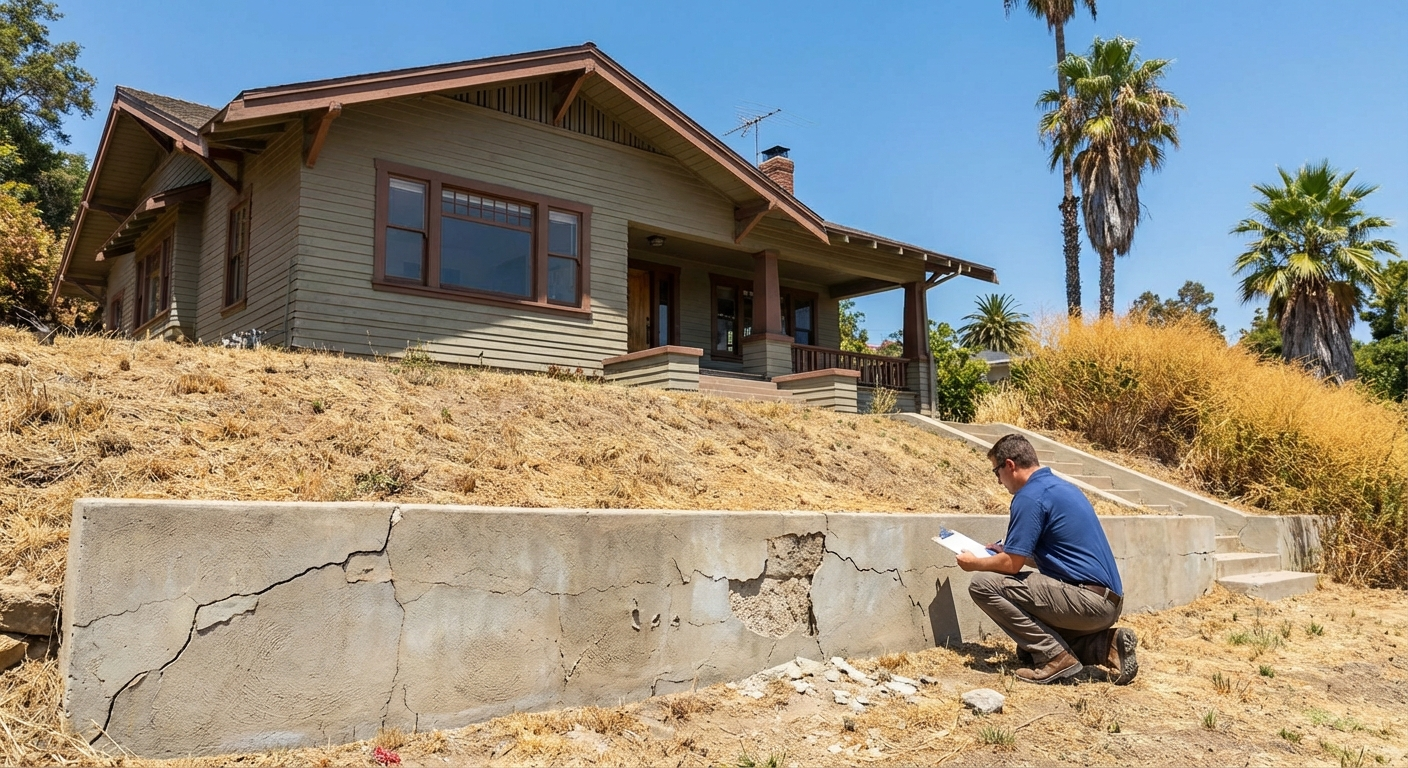
You buy a house in California, right? It’s the dream. Sunshine, maybe an ocean breeze, a place to call your own. You sign the papers, get the keys, and for a while, everything feels solid. Then, one day, you notice it. A hairline crack snaking up a wall, or maybe a door that suddenly sticks a bit more than it used to. Your heart sinks. Foundation damage. Just hearing those words can send a shiver down any homeowner’s spine. It’s expensive, it’s disruptive, and you’re probably wondering: does my home insurance even cover this mess?
For most California homeowners, that’s the million-dollar question. The short answer is yes. The real answer is much, much more complicated.
Why California’s Ground Rules Are Different
Living here, we get to enjoy some pretty incredible things. We also deal with some unique challenges, especially when it comes to the very ground our homes sit on. Think about it: earthquakes are a part of life, the soil in places like the Inland Empire or parts of the Central Valley can be incredibly expansive clay – it swells when wet and shrinks when dry. We swing from multi-year droughts to atmospheric rivers dumping inches of rain. All these things can put incredible stress on a home’s foundation.
A sudden tremor, for example, can rip through concrete. Heavy rains after a long dry spell can cause soil to expand unevenly, pushing and pulling at your slab or perimeter foundation. Maybe a tree root decides your sewer line looks tasty, causing a slow leak that washes away supporting soil. Each scenario tells a different story, and your insurance company will listen very closely to how that story begins.

When Your Policy Steps Up (and When It Sits Down)
Here’s the thing about home insurance: it’s designed to protect you from sudden, accidental damage from specific events, often called “perils.” A fire ripping through your kitchen? Covered. A burst pipe flooding your living room? Probably covered. A tree falling on your roof in a storm? You bet.
But here’s where it gets interesting. Foundation damage rarely comes from a single, dramatic event like a fire. Often, it’s a slow burn – years of subtle shifts, water issues, or ground movement. And that’s where most policies draw a hard line.
Generally, standard homeowner’s policies exclude damage caused by:
* **Earthquakes:** This is a big one in California. Your standard policy won’t cover quake damage.
* **Flooding:** We’re talking about water that comes from *outside* your home, like a river overflowing its banks or heavy rainfall pooling up.
* **Settling, cracking, shrinking, bulging, or expansion of pavements, patios, foundations, walls, floors, roofs, or ceilings:** This is a broad exclusion designed to keep insurers from paying for normal wear and tear or gradual ground movement.
* **Poor maintenance or neglect:** If you ignore a leaking gutter for years and water erodes your foundation, that’s often on you.
* **Ground movement:** Unless it’s directly caused by a covered peril (like a sudden collapse from a burst pipe *inside* your home), things like subsidence or landslides are usually out.
See the pattern? Insurers want to pay for things that happen quickly and unexpectedly. They’re less keen on footing the bill for problems that develop over time or could have been prevented.
Earthquakes and the CEA: A Separate Conversation
You can’t talk about California foundations without talking about earthquakes. Every insurer offering home policies here *must* offer you earthquake coverage. Most often, this comes through the California Earthquake Authority (CEA), a state-run program.
If you opt for CEA coverage – and many people do, especially in places like Ventura County or the Bay Area – it’s a separate policy. It has its own rules, and often, very high deductibles. We’re talking 10% or even 15% of your dwelling coverage. So, if your house is insured for $800,000, your deductible could be $80,000 or $120,000 before the CEA even pays a dime. It’s not cheap, but for some, it’s peace of mind. It’s a policy designed for catastrophic loss, not minor cracks.
Water, Water Everywhere (and the Damage It Does)
Water is usually the culprit in foundation issues, but the *source* of the water makes all the difference.
Let’s say a pipe bursts *inside* your slab foundation. This is often covered. It’s sudden, it’s accidental, and it’s a direct result of a covered plumbing peril. The water leaks, washes away soil, and your foundation cracks. Good news, right?
But wait – what if the water comes from *outside*? Maybe your drainage system is failing, and rainwater pools around your house for months, slowly eroding the soil. Or perhaps an underground stream – not a “flood” in the traditional sense, but groundwater nonetheless – is causing issues. These scenarios are usually *not* covered. The damage isn’t from a sudden event; it’s from a gradual, ongoing problem.
This distinction between “sudden and accidental” water damage and “gradual” water damage is probably the biggest hurdle for foundation claims. If your slab leak went unnoticed for years, slowly rotting wood and weakening your foundation, the insurer might argue it was a gradual process, not a sudden event. It can be a tough fight.
The Creeping Problem of Soil and Settling
California’s soil can be a real character. Those expansive clays we mentioned? They’re everywhere, from the Santa Clarita Valley to parts of Sacramento. When they dry out, they shrink, creating voids. When it rains, they expand, pushing against your foundation. This constant movement, over years, can cause significant damage.
Unfortunately, damage from “earth movement,” “settling,” or “subsidence” – unless it’s a direct result of an earthquake (and you have earthquake insurance) or a covered peril like a sudden pipe burst – is almost always excluded. Your policy doesn’t pay for the ground under your house to do what it naturally does. It’s a frustrating reality for many homeowners.
Maintenance Matters: The Unsung Hero (or Villain)
Here’s an uncomfortable truth: sometimes, foundation problems are exacerbated, or even caused, by a lack of regular home maintenance.
Think about it:
* **Clogged gutters:** Water overflows, pools at your foundation, and slowly erodes soil.
* **Cracked stucco or siding:** Allows water to seep into walls and potentially down to the foundation.
* **Improper grading:** Your yard slopes *towards* your house, directing all rainwater right to the foundation.
* **Over-watered landscaping:** Sprinklers constantly soaking the soil next to your house.
These might seem like small things, but over time, they can lead to big problems. Insurers typically have a “wear and tear” or “neglect” exclusion. If they can prove that your foundation issues stem from you not keeping up with routine home care, they’re very likely to deny the claim. It’s a strong argument, and often, a fair one.
Making a Claim: The Paper Trail and the Professionals
Let’s say you suspect foundation damage. You’ve got cracks, sloping floors, doors that won’t close. What do you do?
First, don’t wait. Report it to your insurer quickly. But be prepared. This isn’t a quick fix. Your insurance company will likely send out an adjuster. They might also bring in structural engineers or geotechnical experts to figure out *why* the damage happened. They’ll want to know the cause of loss – remember, that’s the whole ballgame. Was it a sudden event? Or gradual?
You might also want to get your own experts involved – a structural engineer, for example. Their report can be a powerful tool, especially if it points to a covered peril. Document everything with photos and notes. Keep meticulous records.
The reality is, many foundation damage claims are denied initially. It’s not because insurers are inherently bad guys, but because the exclusions are so broad, and the “cause” is often ambiguous. You’ll need to make a very strong case that the damage was caused by something your policy *does* cover.
The Shifting Sands of California Insurance
Trying to get home insurance in California these days can feel like a maze. Major players like State Farm and Farmers have pulled back significantly, especially in wildfire-prone areas. Even AAA has become more selective. This means fewer options and, often, higher premiums for everyone.
The California Department of Insurance (CDI) and Prop 103 are always in play, trying to balance consumer protection with insurer solvency. This instability in the market doesn’t directly change what foundation damage is covered, but it does mean insurers are scrutinizing every claim even more closely. They’re looking to manage their risk, and foundation claims are inherently risky for them.
It’s precisely why having an experienced guide is so important. Someone who understands the nuances of California policies, the local geological quirks, and how insurers interpret those tricky exclusions.
Your Best Bet: Be Prepared, Not Scared
Honestly, the best defense against foundation damage woes is a good offense.
1. **Read your policy:** Before you have a problem, understand what’s covered and, more importantly, what’s *not*. Pay special attention to the exclusions around earth movement, water damage, and settling.
2. **Maintain your home:** Keep those gutters clean. Ensure proper drainage. Fix leaks quickly. Address any cracks in stucco or siding.
3. **Consider earthquake insurance:** If you don’t have it, at least understand what you’re opting out of.
4. **Talk to an expert:** If you’re unsure about your coverage, or you’re starting to see signs of trouble, don’t guess.
When you’re dealing with something as important as your home’s foundation, guesswork won’t cut it. You need clear answers and a clear path forward. If you’re a California homeowner and you’re worried about your foundation or just want to understand your policy better, it’s always a good idea to speak with an independent insurance agent who specializes in our unique market.
Ready to talk about your home insurance and ensure you’ve got the right coverage for California’s unique challenges? Get a quote today!
Frequently Asked Questions About Foundation Damage and Home Insurance
Q: Will my home insurance cover foundation repair if a tree root causes damage?
A: This is tricky. If the tree root causes a sudden, accidental plumbing leak (like it cracks a pipe inside your slab), the resulting water damage and possibly the pipe repair might be covered. However, the damage caused by the root itself, or long-term structural damage from the root pushing on the foundation, is often excluded under “earth movement” or “settling” clauses. It really depends on the exact cause of loss and your policy wording.
Q: My foundation damage was caused by a slow, persistent leak from an old water heater. Is that covered?
A: Probably not. Standard policies usually cover “sudden and accidental” water damage. A slow, persistent leak that developed over time is often considered gradual damage, and insurers will likely deny the claim under wear and tear or gradual damage exclusions. The key is how long the leak was occurring and whether it was reasonably discoverable.
Q: What’s the difference between “earth movement” and “earthquake” in my policy?
A: “Earthquake” is a specific peril, typically only covered by a separate earthquake policy (like through the CEA). “Earth movement” is a broader exclusion in standard home policies that refers to things like landslides, mudslides, subsidence, sinkholes, or settling of the ground – basically, anything that causes the earth to move, *unless* it’s a direct result of an earthquake.
Q: Can I get specific “foundation repair” insurance?
A: Not really as a standalone policy. Foundation damage coverage is always tied to the specific perils covered by your overall homeowner’s policy, or by a separate earthquake policy. There isn’t a dedicated “foundation insurance” product in the market that covers all types of foundation damage regardless of cause.
Q: If my foundation damage isn’t covered, what are my options?
A: If your claim is denied, you have a few paths. First, review your policy and the denial letter carefully. You can get an independent structural engineer’s report to contradict the insurer’s findings. You can also appeal the decision with your insurer or contact the California Department of Insurance for assistance. Sometimes, the only option is to pay for repairs out of pocket, or explore home equity loans for financing.
Understanding your home insurance policy in California, especially when it comes to the complex world of foundation damage, can save you a lot of heartache and money down the road. Don’t wait for a crisis to understand your coverage. Speak with an expert like Karl Susman at California Homeowner Quotes. He’s helped countless California homeowners navigate these challenging waters. Give us a call at (877) 411-5200 or visit us online to review your options. CA License #OB75129.
Want to make sure your foundation is covered as best as possible? Let’s chat about your specific situation. Get a quote today!
This article is for informational purposes only and does not constitute financial advice.